
Water Tank Blow Moulding Machine: A Complete Guide to Manufacturing 500L–5000L Storage Tanks

Water storage tanks are one of the most consistently in-demand plastic products across residential, commercial, agricultural, and industrial sectors. As construction activity, rural water supply projects, and industrial infrastructure continue to expand, the need for durable, leak-proof, and cost-efficient plastic water tanks keeps growing steadily.
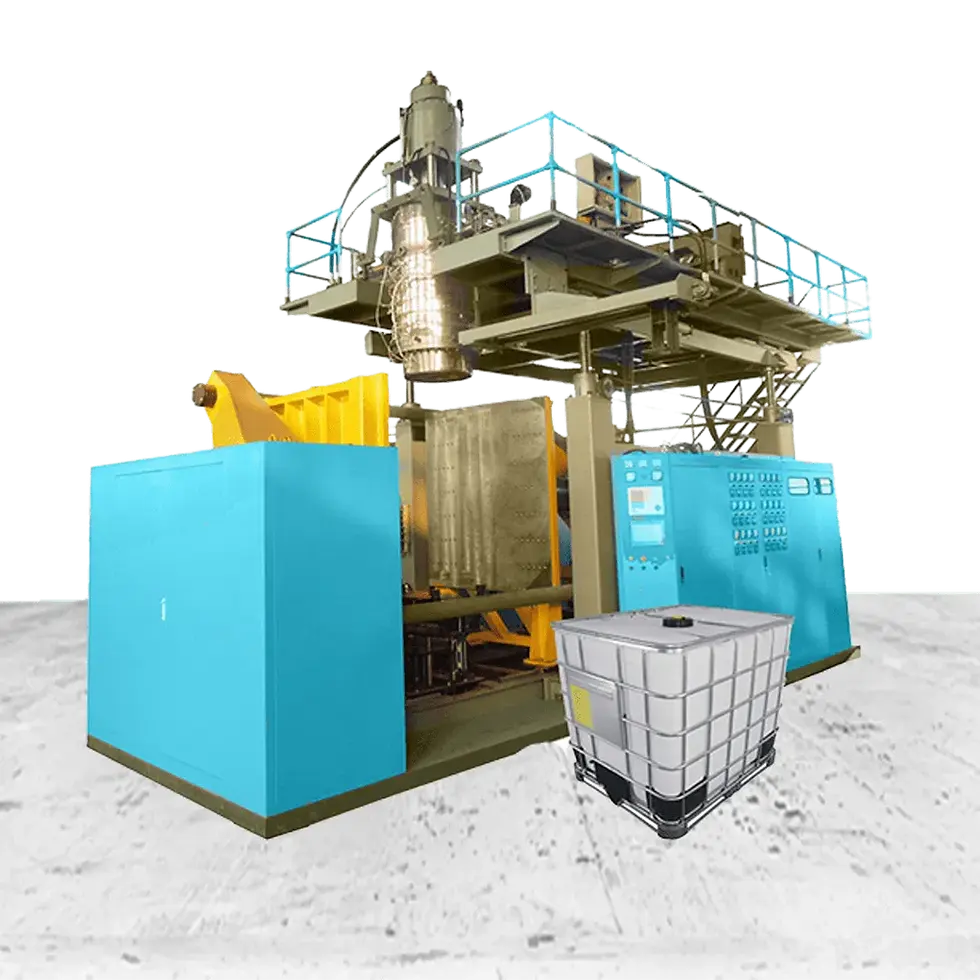
For plastic processors looking to enter or scale up in this segment, the choice of machine matters just as much as the choice of raw material. At LINUS PLASTICS, our Water Tank Blow Moulding Machine range is built to produce high-strength, uniform-wall-thickness
water tanks from 500 litres up to 5000 litres, using a fully automatic single-station process with up to 4-layer construction capability.
In this blog, we'll break down what makes a water tank blow moulding machine reliable, where these tanks are used, the technical features that matter most, and how LINUS PLASTICS machines are positioned to compete in this space.
Why Water Tank Manufacturing Is a High-Demand Business
Plastic water tanks have replaced traditional concrete and metal storage tanks in most residential and industrial settings because they're lighter, corrosion-free, hygienic, and far easier to install. Demand comes from:
Residential and commercial construction - rooftop and ground-level water storage
Agriculture and irrigation - farm-level water storage and drip irrigation systems
Industrial facilities - process water and firefighting water reserves
Municipal and rural water supply projects - government-backed water storage infrastructure
Real estate and infrastructure development - a segment that continues to expand year-on-year
This consistent, broad-based demand makes water tank manufacturing a stable, scalable product line for plastic processors - provided the production machine can deliver strength, consistency, and volume.
What Makes a Reliable Water Tank Blow Moulding Machine
Water tanks need to withstand constant pressure, UV exposure, and years of outdoor use without cracking, sagging, or leaking. That performance is determined almost entirely by the quality of the blow moulding machine used to produce them. The key factors are:
Wall-thickness uniformity - uneven walls create weak points that fail under pressure
Multi-layer construction capability - added UV protection and structural layers extend tank life
Automation and process control - consistent, repeatable cycles reduce rejection rates
Hydraulic and clamping stability - critical for handling large single-station moulds
Energy efficiency - extrusion output directly affects per-unit production cost
LINUS PLASTICS Water Tank Machine: Salient Features
The LINUS PLASTICS Water Tank Blow Moulding Machine is engineered around these exact performance requirements:
PLC Control with MMI - precise, automated cycle control for consistent output
FIFO Accumulator Head - ensures even melt distribution and uniform wall thickness across every tank
A.C. Variable Frequency Drive (Extruder) - optimized extrusion speed with lower energy consumption
Single Station Design, Up to 4 Layers - supports multi-layer tank construction for added strength and UV resistance
Lightweight Output Tanks - easier handling, transport, and installation for end customers
Reduced Manpower Requirement - higher automation lowers dependency on manual labour
Threaded Lid Design - secure, leak-proof closure for long-term water storage
Plunger / Multi-Hydraulic Range Options - flexible hydraulic configurations to match different production scales
Machine Range and Specifications
Capacity range: 500 Ltrs to 5000 Ltrs
Configuration: Single Station, Up to 4 Layers
Process: Fully Automatic Blow Moulding
This range allows manufacturers to serve everything from small residential tank demand to large-capacity industrial and municipal water storage requirements, using a single, scalable machine platform.
How LINUS PLASTICS Compares in the Water Tank Machine Market
The Indian blow moulding machinery market has several manufacturers offering water tank production equipment. Buyers typically evaluate suppliers on:
Layer capability - single-layer machines limit UV resistance and durability, while multi-layer capability (like the up-to-4-layer configuration on LINUS PLASTICS machines) significantly extends tank lifespan
Automation level - full PLC/MMI control reduces operator dependency and rejection rates compared to manual or semi-automatic systems
Wall consistency technology - an accumulator head system is essential for producing tanks that meet pressure and load standards
Turnkey support - many buyers now prefer suppliers who can support complete plant setup rather than machine supply alone
LINUS PLASTICS is positioned around exactly these differentiators — automated control, multi-layer capability, and full turnkey plant expertise — giving processors a complete manufacturing solution rather than a standalone machine purchase.
Why Invest in Water Tank Manufacturing Now
With ongoing growth in residential construction, agricultural infrastructure, and government water supply initiatives, demand for plastic water storage tanks shows no signs of slowing down. For plastic processors, this means:
A large, stable, and recurring domestic market
Opportunities in both retail-scale and bulk/industrial-scale tank production
A scalable product line from 500L to 5000L on a single machine platform
Get in Touch with LINUS PLASTICS
If you're planning to set up or expand water tank manufacturing capacity, LINUS PLASTICS offers a range of fully automatic blow moulding machines engineered for strength, consistency, and high production efficiency — backed by our turnkey plant expertise.
Explore our full Water Tank range, request the data sheet, or schedule a meeting with our team today.
#LRingDrum #LRingDrumMachine #LRingDrumBlowMouldingMachine #PlasticDrum #PlasticDrumManufacturing #PlasticDrumMakingMachine #BlowMouldingMachine #ExtrusionBlowMoulding #PlasticBlowMoulding #IndustrialDrums


Comments